
zaveri bazaar mumbai
Description
Zaveri Bazaar Mumbai: The Beating Heart of India’s Jewellery Trade
Hidden within the lively lanes of Bhuleshwar in South Mumbai lies Zaveri Bazaar, a place where India’s centuries-old fascination with gold, gems, and craftsmanship meets the modern rhythm of commerce. The name itself comes from the Gujarati word “Jhaveri,” meaning jeweller—a fitting title for a district that handles a majority of the country’s jewellery trade. For visitors, the market offers a dazzling yet chaotic experience: a maze of gold-lined shopfronts, diamond traders, silver artisans, and bustling crowds, all moving to the constant hum of business.
A Legacy Carved in Gold
Zaveri Bazaar’s story began in the 19th century, when skilled Gujarati and Marwari jewellers settled near Mumbadevi Temple. Its proximity to Mumbai’s docks allowed easy import of bullion and tools, while nearby markets like Crawford Market provided logistics for distribution. Over time, the bazaar grew into a self-sustained ecosystem where every part of jewellery making—from design and casting to stone setting and polishing—happens within walking distance.
This cluster became a symbol of heritage craftsmanship. Generations of families still run multi-generation stores, passing down both trade secrets and customer relationships. The neighbourhood’s narrow alleys, filled with Victorian-era façades and colonial buildings, add historical charm to the modern trade. The result is a unique blend of tradition, innovation, and relentless entrepreneurship.
The Marketplace at Work
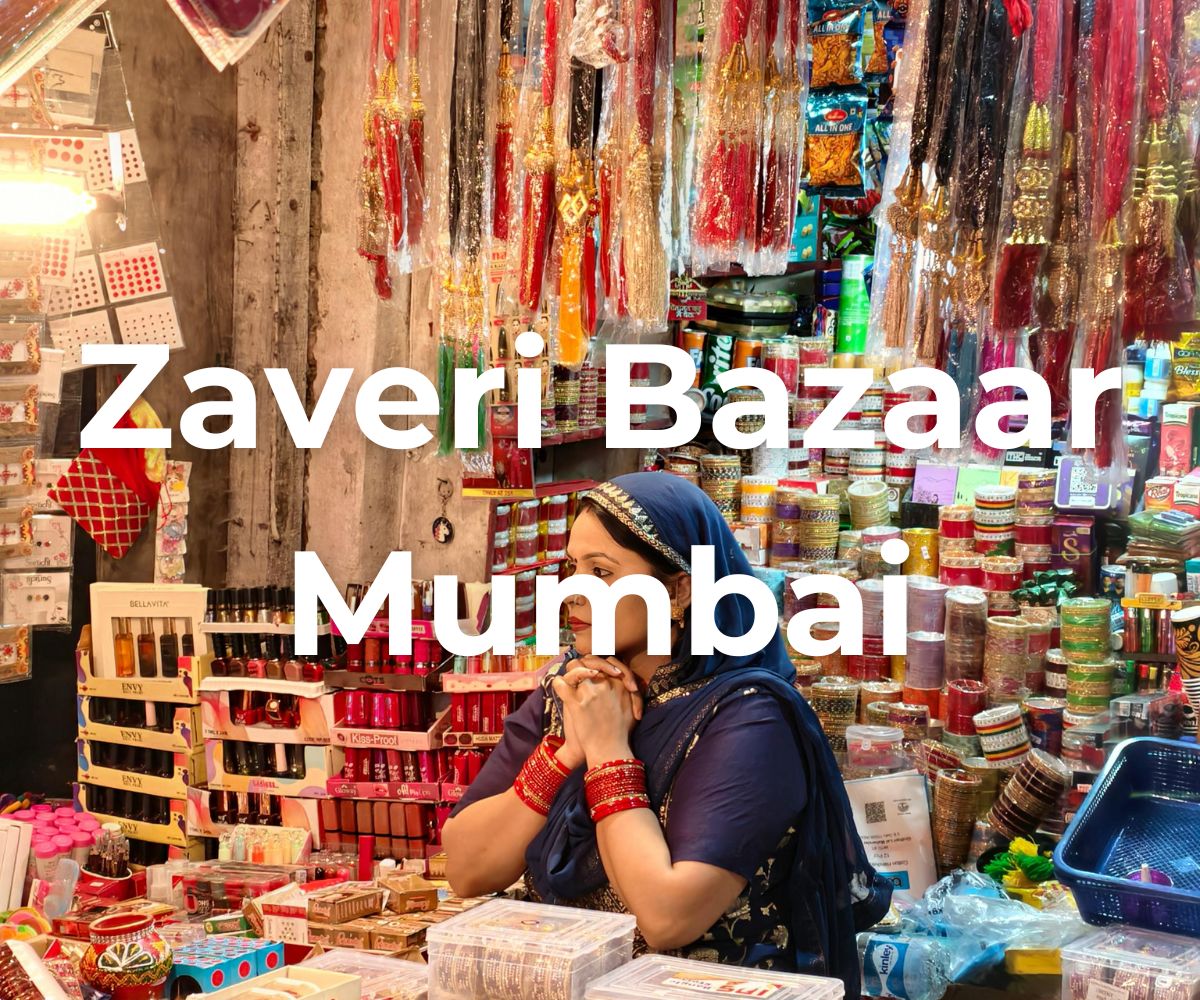
Walking through Zaveri Bazaar is an experience for all the senses.
- Sound: the tapping of karigars shaping metal in upstairs workshops, the rhythmic ring of hammers, and the murmur of negotiation in multiple languages.
- Sight: window displays of radiant bridal sets, gleaming bangles, diamond solitaires, and rows of gold coins.
- Smell: incense from nearby temples mingling with the aroma of street food.
More than a shopping area, it is a microcosm of Mumbai’s spirit—energetic, resilient, and endlessly creative.
What Makes Zaveri Bazaar Unique
1. Complete Jewellery Ecosystem
Designers, polishers, engravers, and wholesalers coexist in a tight cluster. This proximity allows customers to customize or repair jewellery within hours—a rarity even in modern showrooms.
2. Range and Diversity
From 18-karat white gold cocktail rings to 22-karat bridal harams, from uncut Polki sets to minimal daily-wear chains, variety defines the market. You can buy everything from luxury diamond necklaces to handcrafted silver anklets.
3. Transparent Pricing
Daily bullion rates drive gold prices. Bargaining focuses on making charges—the fee for craftsmanship—rather than on the gold rate itself.
4. Cultural Continuity
For Indian families, jewellery holds emotional and spiritual significance. During weddings and festivals like Diwali, Dhanteras, or Akshaya Tritiya, the bazaar transforms into a glowing labyrinth of celebration, echoing both faith and festivity.
Navigating the Bazaar
Location
Zaveri Bazaar sits between Bhuleshwar, Kalbadevi, and Crawford Market. Key landmarks include Mumbadevi Temple and Sheikh Memon Street. The area is pedestrian-friendly but crowded—best explored on foot.
How to Reach
- By Local Train: Nearest stations are Marine Lines, Charni Road, Masjid Bunder, and CSMT. From any of these, take a taxi or walk 15 minutes.
- By Bus or Taxi: BEST buses stop near Crawford Market. Taxis and ride-hailing apps drop visitors at the periphery; cars are not ideal for inner lanes.
- By Car: Limited parking near Kalbadevi; opt for nearby pay-and-park facilities
Best Time to Visit
Weekdays between 10:30 AM and 1:30 PM are ideal. Saturdays and festival weeks are busiest. The market closes on Sundays.
What to Buy
Gold Jewellery
Traditional 22K yellow gold dominates the bazaar. Popular items include:
- Bridal sets and temple jewellery
- Bangles, mangalsutras, chains, and earrings
- Lightweight daily-wear pieces
- For diamond jewellery, 18K gold provides the right balance of strength and shine.
Diamonds and Polki
Zaveri Bazaar doubles as a major diamond-trading hub. Visitors find certified solitaires, engagement rings, and Polki-Kundan pieces inspired by Mughal design.
Silver Articles and Coins
Entire lanes specialize in silver idols, pooja items, and giftware. Hallmarked gold and silver coins remain popular investment choices.
Gemstones
Loose rubies, sapphires, emeralds, and pearls are available with certification from reputable labs. Ask about treatment disclosures before buying.
Investment Bullion
Many buyers visit to purchase bars and coins as financial assets. Rates follow international markets and change daily.
How Pricing Works
Gold jewellery price = (Metal weight × daily rate) + making charges + taxes.
Making charges vary by design complexity.
- Simple patterns → flat rate per gram
- Intricate designs → percentage of metal value (10–18%)
Diamond prices depend on the 4 Cs—cut, colour, clarity, and carat—plus certification from labs like GIA or IGI. For Polki or Kundan pieces, handwork often outweighs the cost of the raw materials.
Hallmarking and Certification
Buy only BIS-hallmarked gold to confirm purity. Each hallmark shows:
- BIS logo
- Karat value (e.g., 22K or 18K)
- Unique identification number
For diamonds, verify certificates and cross-check the number with any laser engraving on the stone. Some jewellers now provide QR codes for instant authenticity checks.
Smart Shopping Strategy
- Scan the Market First. Walk around to compare styles and make charges.
- Shortlist Stores. Choose three that align with your taste and budget.
- Compare Like-for-Like. Ensure equal purity, weight, and finishing.
- Negotiate Gracefully. Making charges are negotiable; gold value is fixed.
- Ask About Buyback Policies. Check deductions or appraisal fees.
- Check Certificates and Bills. Insist on detailed invoices showing purity and tax breakup.
Bargaining Tips
- Track the day’s gold rate before visiting.
- Negotiate mainly on making charges.
- Buying multiple pieces? Ask for bundle discounts or free services, such as cleaning or resizing.
- Stay polite—relationships often lead to better offers in future visits.
Quality Checklist Before You Pay
- Verify karat stamp and BIS hallmark.
- Inspect finishing under bright light—no sharp edges or uneven polish.
- For diamond pieces, check prongs and symmetry.
- For Polki jewellery, ensure secure kundan work and smooth backing.
- Keep a copy of every bill and certificate for insurance and resale.
Safety and Comfort Tips
Crowded lanes and high-value goods require alertness:
- Carry minimal cash; use digital or bank payments for large transactions.
- Keep wallets secure and backpacks closed.
- Avoid flashy jewellery while exploring.
- Stay hydrated and wear comfortable shoes.
- Use an insured courier for deliveries if needed.
Security cameras, private guards, and police patrols are common, keeping the market generally safe for both locals and tourists.
Cultural Touchpoints and Design Styles
Zaveri Bazaar reflects India’s cultural mosaic through its designs:
- Maharashtrian:Thushi chokers, Kolhapuri Saaj necklaces, Vaati mangalsutras
- North Indian: Polki-Kundan sets with colourful meenakari backs
- South Indian: Temple-inspired Kasu Mala and Mango Haram necklaces
- Contemporary: Minimalist rings, geometric earrings, and mixed-metal designs
Behind the Scenes: The Karigars
Above the retail floors, hundreds of workshops hum with precision. Here, artisans known as karigars hand-craft every piece using inherited techniques—meenakari (enamelling), jadau (stone setting), filigree, and engraving. Their craftsmanship gives each ornament individuality that machines cannot replicate.
These artisans are the unsung backbone of Zaveri Bazaar. Many jewellers credit their success to long-standing partnerships with specific karigar families, sometimes spanning decades.
Responsible and Sustainable Buying
Modern buyers are increasingly asking about ethical sourcing:
- Choose conflict-free diamonds and recycled gold when available.
- Ask for lab-grown diamond options for eco-friendly purchases.
- Support jewellers who disclose full supply-chain details
Caring for your pieces extends their life—clean gold with soft cloths, polish silver with anti-tarnish wipes, and get diamond prongs checked every six months.
For Wholesalers and Designers
Zaveri Bazaar also serves as a B2B hub for designers and retailers. Buyers source:
- Findings, clasps, and chains
- Casting moulds and gemstone lots
- Customized production for export orders
Wholesale dealers often require minimum order quantities and offer discounts for bulk purchases. Building relationships with artisans ensures priority service and consistent quality.
Food and Rest Stops Nearby
After hours of shopping, unwind at South Mumbai’s famous eateries:
- Badshah Cold Drink House for lassi and falooda
- Bhuleshwar Street stalls for pav bhaji and chaat
- Kalbadevi restaurants for traditional Gujarati thalis
For quiet breaks, step toward Marine Lines or Crawford Market, where you can find cafés amid historic architecture.
Suggested One-Day Itinerary
10:00 AM – Arrive near Mumbadevi Temple, grab a quick coffee.
10:30 AM–12:30 PM – Visit shortlisted shops, compare designs, and inspect hallmarks.
12:30 PM–1:30 PM – Lunch at Bhuleshwar or Crawford Market.
2:00 PM–3:30 PM – Finalize purchases, negotiate, and complete billing.
4:00 PM onward – Relax, explore nearby markets or visit Girgaum Chowpatty for sunset
Budget Scenarios for Buyers
- Daily-wear earrings (22K): Lower making charges per gram, simple screw-back designs.
- Engagement ring (diamond): Choose VS-clarity, near-colourless stones; compare quotes across three shops.
- Wedding trousseau: Split spending across one statement necklace, two versatile sets, bangles, a mangalsutra, and smaller gifts. Negotiate for free polishing or one resize within a year.
Challenges and the Future
Zaveri Bazaar’s charm comes with challenges: narrow lanes, congestion, and aging infrastructure. Competition from air-conditioned malls and online jewellers puts pressure on traditional traders. Yet, adaptation keeps the bazaar relevant. Many family businesses now use social media and e-commerce to showcase collections and attract younger customers.
Lab-grown diamonds, lightweight gold, and mixed-metal trends are reshaping consumer demand. Still, no online catalogue can replicate the human warmth and trust-based dealings that define Zaveri Bazaar.
Quick Summary for Visitors
- Where: Bhuleshwar / Kalbadevi, South Mumbai
- Nearest Stations: Marine Lines, Charni Road, Masjid Bunder, CSMT
- Timings: 10 AM – 7:30 PM; closed Sundays
- What to Expect: Gold, diamonds, silver, gemstones, and handcrafted jewellery
- Tips: Compare making charges, verify hallmarks, travel light, stay aware
Conclusion: The Soul of Mumbai in a Marketplace
Zaveri Bazaar is more than India’s largest jewellery market—it is a living chronicle of Mumbai’s identity. Every lane tells stories of heritage, artistry, and trust that have survived empires, economies, and generations. To shop here is to step into a world where gold is not merely a metal but a memory, a promise, and a legacy.
Whether you leave with a jewel box or simply a heart full of wonder, a visit to Zaveri Bazaar offers a radiant look into the cultural and commercial heartbeat of Mumbai—a city forever gilded in gold.
Comments (0)





Recent Blogs


Top Local Business


.png)


About Us
Welcome to Punnaka.com – your global gateway to businesses, opportunities, savings. Connecting you globally with listings of Businesses, Malls, Brands, Franchises, Offers, Coupons, Freebies, Articles, Blogs, Press Release etc. List Locally, Grow Globally!